

Future Clinician
Treat the patient by understanding the pathogen.
- MIC 304: Introduction to Microbes and the Immune System (Lab)
- MIC 321: Immunobiology
- MIC 322: Medical Parasitology
- BPH 305: Issues in Health Disparities
One Degree: One Bachelor of Science degree from the College of Arts and Sciences
Focus: Microbiology & Immunology Major + Public Health Major
Credits: ~120 Credits
Ideal For: Students who want the expertise without the extra year.
Select on the Common App: MIPH_BS
Sample Study Plan
Two Degrees: One Bachelor of Science Degree (College of Arts & Sciences) AND One Bachelor of Science Degree (School of Nursing and Health Sciences).
Focus: Complete immersion in both colleges.
Credits: ~150 Credits.
Ideal For: Pre-meds and "Super Students" wanting maximum credentialing.
Select on the Common App: MIPHP_BS
Sample Study Plan
Apply Now
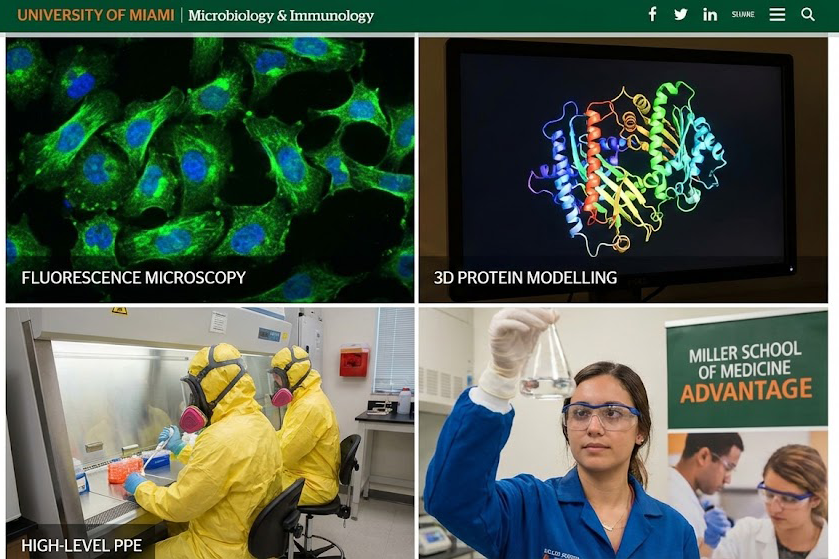
THE MEDICAL SCHOOL ADVANTAGE
Taught by Faculty from the Miller School of Medicine.
Apply Now
The Power of Twos
Why settle for a background in just one field?
In the same 4 years, our students can earn up to
two distinct B.S. degrees (or a double major),
mastering both the molecular science of the laboratory and the population science of the world.
Microbiology & Immunology and Public Health
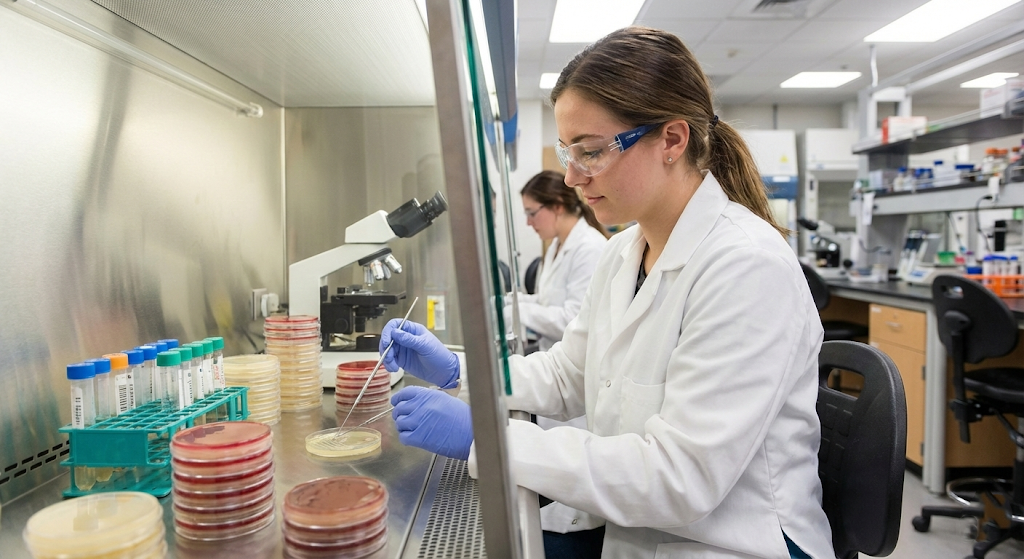
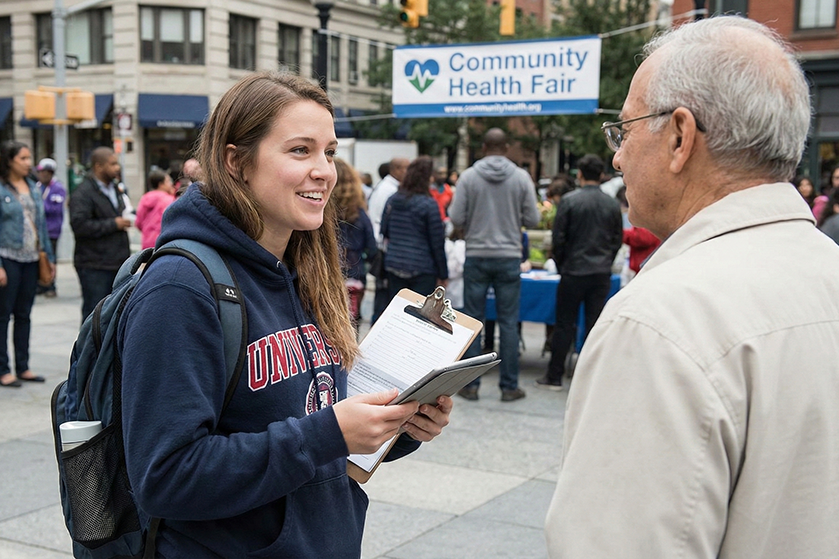
=
2 Degrees + Pre-Med Rigor
Apply Now
The Curricular DNA
Choose Your Pathway

Apply Now
The Lab vs. The Field
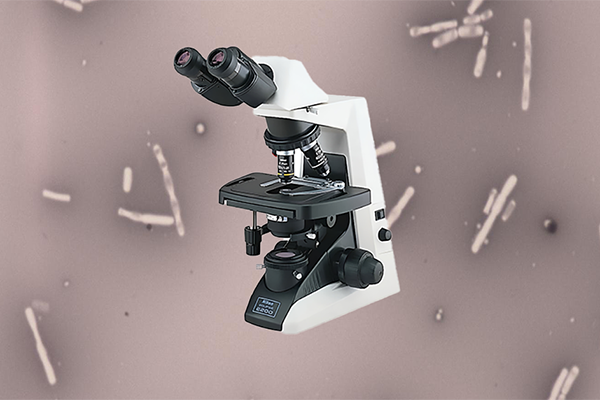
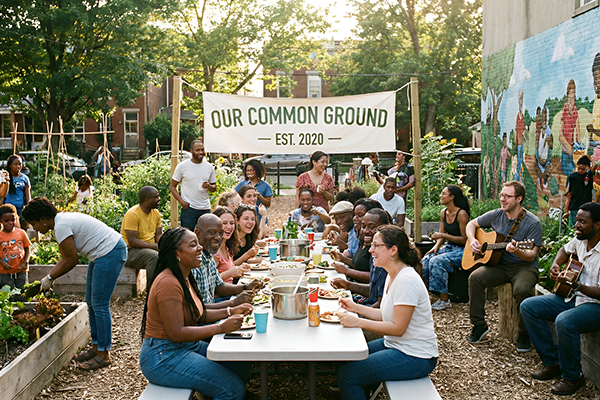
The Strategic Advantage
Ready to Start?

Choosing to pursue a dual degree in Microbiology & Immunology and Public Health at the University of Miami has been one of the most defining decisions of my academic career. When I entered college, I knew I was drawn to understanding disease and human health. The Microbiology and Immunology program gave me exactly that, a deep understanding of human health grounded in research and critical thinking. Throughout my courses I learned how pathogens interact with the human body, how the immune system works, and how scientific inquiry drives medical advancement.
As I progressed through my major, I discovered the opportunity to add a second major in Public Health. When I decided to add this dual degree, I was unaware of how impactful the program would be for my personal development. Public health introduced me to the broader context of medicine, bringing the social determinants of health, health disparities, population-level interventions, and the structural forces that shape patient outcomes into perspective.
Now, as I enter my senior year, I am profoundly grateful for the decision to pursue both majors. The dual degree program has not only strengthened my preparation for medical school but has also shaped how I envision myself as a future physician. It has taught me to value both the scientific precision of medicine and the community centered aspects of care. Learning from passionate faculty across both programs who have been both mentors to me and leaders in their fields has further solidified my confidence in this path.
unparalleled foundation.
For students seeking a comprehensive understanding of health that bridges deep understanding of science and real world impact, this dual degree program offers an
